Mystics & Statistics

Panzer Aces Wittmann and Staudegger at Kursk – part 3

My previous posts on this subject looked at the claims of two panzer aces made on the 5th of July 1943 and the claims for Wittmann for 7 and 8 July. Let me address a couple of more claims credited to Michael Wittmann (1914-1944) and Franz Staudegger (1923-1991).

  1. It is claimed that Staudegger killed 22 T-34s on 7 or 8 July.
    1. Including two tanks in close combat.
      1. Agte’s book does note two tanks killed in close action in the battle of 8 July but this was done by the infantry of the 2nd SS (Deutschland) PzGr Rgt (Agte, page 103). This was in addition to the 22 T-34s Staudegger killed.
      2. But Agte does note the two T-34s killed in close action by Staudegger on the 5th, crediting him with 24 kills for the battle (Agte, page 128).
    2. At the village of Psyolknee.
      1. Agte does not claim it was at Psyolknee.
      2. But these people do (and they date the battle 7 July):
        1. https://ww2gravestone.com/tiger-1-germany-t-34-soviet-union/
        2. https://www-d0.fnal.gov/~turcot/Armour/tiger.htm
        3. http://military.wikia.com/wiki/Franz_Staudegger
        4. As does many other sites (just search Staudegger & Psyolknee)

His actual Knight’s Cross submission says 8 July (Agte, page 105), so not sure where the 7 July date comes from. Usually the sources that mention the 7 July date also mention the village of Psyolknee. Well, I have the 1:50000 scale maps, and I cannot find a village anywhere called Psyolknee. Have no idea where that name comes from (actually let me guess…several kilometers north of them was the river the Psel. It could also have been transliterated as Psyol. Not sure where the “knee” comes from).

The story is that his unit went off to the NW leaving him in Teterivino. There was then an attack by 50-60 tanks from the NE and he drove out of Teterivino, engaged them alone, but with the 3rd SS Panzer Grenadier Regiment in the area and also engaged. He killed 17 tanks in two hours. The Soviet armor withdrew. He then drove after them, ran across them in a hollow and destroyed five more, running out of ammo. All were T-34s.

So, which Soviet unit was attacking on 8 July to the NE of Teterivino with 50-60 tanks?

Well, as reported in my book (Kursk, page 622) the LSSAH panzer group attacked to the northwest out of Teterevino (map grid 3050). Most of this force became embroiled with a fight with parts of the XXXI Tank Corps, specifically the 100th Tank Brigade. I note that the assault gun battalion, reinforced by the 2nd SS PzGr Rgt was sent to Luchki (map grid 2546) to guard against a new tank threat from the area northeast of Teterevino (probably the X Tank Corps, but it could have been the newly arriving II Tank Corps). I do have maps from the SS Panzer Corps (page 624) and the XXXI Tank Corps (page 626) for that day in the book. Luchki is actually SW of Teterevino (north). Note that there is a second Teterevino on the map at map grid 3340. They are only around 10 kilometers from each other. I also have a map of the X Tank Corps positions around Prokhorovka and the Psel River for 1700 on 7 July and 2100 on 8 July (page 627).

  1. The SS Panzer Corps map for 8 July shows Das Reich SS PzGrD operating in Teterevino (actually in both of them) — see page 624
  2. XXXI Tank Corps is definitely not near Teterevino — see page 626
  3. The X Tank Corps is to the north and northeast of Teterevino, with the 178th Tank Brigade being the closest — see page 627.

So where was the X Tank Corps on the 8th? Well, the unit records I have don’t help a lot here. They specifically claim that on the July 7 at 1700 the corps was in the area of Prokhorovka along the following line (TSAMO, Fond: 3410, Opis: 1, Delo: 17):

  1. 178th Tank Bde: The bushes–ht. 252.4–the brick;
  2. 183rd Tank Bde and self-propelled gun rgt; the road from Prokhorovka to the southeast—northern outskirts of Lutovo (3957)–the upper reaches of the gullies 1 km south of Prokhorovka (4156);
  3. 11th Mech Bde with a mortar rgt: ht. 230.5–the road junction 2 km northeast of ht. 230.5;
  4. The 186th Tank Bde forms the reserve in the area of Litovka (4261)-Borchevka (4259). this is north of Prokhorovka.

By 2100 on 8 July the situation was as follows:

  1. 11th Mech Bde with a mortar rgt: Krasnyi Oktiabr (2758)–Prokhorovka (2857)–Vasilyevka (3056);
    1. Note that there are two Prokhorovka’s on the map, one at 2857 on the Psel River and the larger and more famous one at 4057. They are 12 kilometers apart. This unit is clearly on the Psel River.
  2. 183rd Tank Bde with a SP gun rgt: the southern outskirts of Kruglik–southern outskirts of Kalinovka;
    1. This is opposite the 48th Panzer corps.
  3. 178th Tank Bde with an AT art rgt: the southern spur of the gully south of Andreyevka (3256?…on the Psel river?) – northern slopes of ht. 240.6
  4. 186th Tank Bde: Situation unchanged

Now you kind of need to look at the 1:50000 scale maps of the area to sort this out (I do have them in my book). I will place the grid coordinates of every named place in their discussion, as they can be mapped out on graph paper (i.e. 3350 is the 33 kilometer on the north-south line and 50 kilometer on the east-west line). But…..we can probably shorten the discussion by looking at the unit strength and losses. The July 7 the 10th Tank Corps had:

  1. 186th Tank Bde; 32 T-34s, 21 T-70s
  2. 183rd Tank Bde: 32 T-34s, 22 T-70s
  3. 178th Tank Bde: 32 T-34s, 21 T-70s
  4. 1450th SP Art Rgt: 9 SU-76s, 12 SU-152s
  5. Elsewhere: 3 T-34s

Now it states for the Corps that losses from 7 – 11 July were 515 killed, 1,124 wounded, 25 guns, 16 AT rifles, 10 cars, 2 tanks, 4 mortars and 57 machine guns (page 10 of TSAMO, Fond: 3410, Opis: 1, Delo: 17). Also note Fond: 3410, Opis: 1, Delo: 14, page 5: X Tank Corps losses from 7-12 July 1943: 515 KIA, 1,124 WIA, 7 76mm, 18 45mm, 4 mortars, 57 machineguns, and 2 T-34s. The First Tank Army (primarily opposite 48th Panzer Corps) started reporting the X Tank Corps on 9 July on two of its tanks brigades (identified in a 10 July report at the 183rd and 186th tank brigades). We have no reports on the 178th Tank Brigade until we receive a personnel loss report from the First Tank Army for 5-19 July. The 178th Tank Brigade lost 34 KIA and 134 WIA for this period. On 15 July the 10th Tank Corps, which had driven into Tolstoye Woods, had a reported tank strength of 110 tanks: 1 KV, 63 T-34s and 45 T-70s (the math error is in the original). So all indications are that no tank brigade from this unit was seriously shot up on the 8th. If one was, it would have had to been the 178th Tank Brigade.

So what is one to do? It appears that while the X Tank Corps three brigades were in the area on the 7th, they were moving over to the 48th Panzer Corps sector and never did attack towards Teterevino. Clearly the German claim of 50 to 60 tanks would indicate one full strength Soviet tank brigade. None of their tank brigades appear to have taken any significant losses at this time. I gather most of the losses were taken by their mechanized brigade, which remained in the Prokhorovka area after the rest of the tank corps had moved over to the northwestern flank of the 48th Panzer Corps.

Lets briefly also look at the XXXI Tank Corps.

  1.  According to Operational Report #206, 1st Tank Army, 0700 July 8, 1943: XXXI Tank Corps with the attached 192nd Tank Bde is defending the line Krasnaya Polyana–ht. 252.5–western outskirts of Malye Mayachi–western half of Greznoye–ht. 227.8. From 0600 the corps is fighting with enemy tanks where have broken through towars ht. 239.6. Enemy aircraft, in groups of 20-30 planes, is severely bombing the corps’ units.
  2. According to Operational Report #207, 1st Tank Army, 1800 July 8, 1943: XXXI Tank Corps with the 192nd Tank Bde; during the day fougth along the line Krasnaya Polyana–Malye Mayachi–Greznoye, repelled the enemty’s attempts to break through to Veselyi. By 1500 the enemy had broken through our front in the direction of Grenzye and Kochetovka from the area of ht. 224.5. Simultaneously, 100 enemy tanks launched an attack in this direction from the area of Veselyi. The fighting continues. Losses for July 7 are 25 tanks knocked out or burned personnel losses are being calculated.
  3. According to Operational Report #208, 1st Tank Army, 1900 July 9, 1943: XXXI Tank Corps, with the 59th Ind Tank Rgt and the 4th AT Art Rgt defended the line along the western bank of the Solotinka River on the Sukhoe Solotino sector–ht. 188.1, with the mission of preventing a breakthrough by the enemy’s tanks in the direction of Kochetovka–the Oboyan highway…..There is no information on losses at this time.
  4. Also according to Operational Report #208, 1900 July 9, 1943: Two brigades of the X Tank Corps reached the fighting at 1600 and were ordered to deploy and attack the enemy, as to halt his further advance to the north and northwest, and to close the break in the line….
  5. Operational Report #210, 1900 July 10, 1943:
    1. X Tank Corps: “On July 9 the corps lost 2 T-34s burned.”

Determining the locations and actions of the II Tank Corps on the 8th and 9th of July are somewhat of a challenge. We have detailed daily reports of actions and losses starting the 10th.

  1. At 0700 on July 10 the enemy attacked the Komsomolets Sokhoz (3253). II Tank Corps is defending the line (excl.) Vasilevka (3056)–Andreyevka (3256) –Mikhailovka (3357) –ht. 241.6–the railroad crossing 2 km north of Belenikhino (3350), with the mission of preventing an enemy advance on Prokhorovka.
    1. This does stretch the corps from the Psel River to in front of Prokhorovka to opposite the Das Reich SS Division.
  2.  The same report (TSAMO, Fond: 3407, Opis: 1, Delo: 108, pages 195-216) does give strength and losses.
    1. 99th Tank Bde: 31 T-34s (15 ready for action, 12 knocked out and 4 undergoing repair), 21 T-70s (16 ready for action, 4 knocked out, and 4 broken down)
    2. 26th Tank Bde: 11 T-34s (3 broken down, 6 knocked out); 4 T-70s (3 broken down, 3 knocked out). In all there are 20 T-34s and 20 T-70s.
    3. 169th Tank Bde: 31 T-34s (5 broken down, 3 knocked out); 19 T-70s (1 knocked out).
    4. 15th Guards Heavy Tank Rgt: 13 Churchills (2 broken down, 2 knocked out).
    5. So based upon losses it is possible on 8 July that 99th Bde could have been engaged (and lost 16 tanks) or the 26th Tank Bde could have been engaged (and lost 9 tanks) or the 169th Tank Bde could have been engaged (an lost 4 tanks). Of course, this is the strength as of 0700 on 10 July. The incident in question happened on the 8th.
  3. My book notes that:
    1. The II Tank Corps was originally ordered to Korocha on the 6th (page 496).
    2. It was alerted the night of 6/7 July (at 2345) and by 0800 on 8 July had concentrated in the Kamyishevka and Pravorot area (page 497) or Pravorot (4052) and Krasnoye (4555) (see page 534)..
    3. It then concentrated in the Vinogradovka area (3650) on the morning of the 8th after its 200 kilometer march on the 7th (page 534).
    4. It attacked on the afternoon of the 8th (page 534).
    5. The II Tank Corps lost at least 31 tanks on the 8th (page 534).
    6. Its attack on the 8th is described in depth on page 629.
      1. The corps attacked at 1320 (Moscow time).
      2. Lost more than 30 tanks.
      3. Between 2100 and 2200 one the brigades of the tank corps attacked height 258.2, which was occupied by the Soviet 183rd Rifle Division.
      4. I do have an interview on that page from a tank commander in the 99th Tank Bde (Senior Sergeant Petr Petrovich Ivanov, born 1924, interviewed 1999).
        1. “…Our tank brigade moved forward in two battalion columns followed by one battalion and motorized rifle units. The Germans started shelling us, but we got a command to move faster. We saw the German tanks when we were about two kilometers away from them. We continued moving closer….When the German tanks and artillery started their massive fire and one of their shells hit my tank turret, my mood dropped, but I continued moving forward in the first line of the brigade. The tank battle lasted for several hours. We could not move forward. Actually, we had to retreat some because the Germans started to go around our tank brigade from the flanks. Then I got a little bit scared. On top of everything, an artillery shell hit the tank. The shell did not penetrate the tank, but a piece of armor, chipped from inside of the tank because of the shell, wound the gunner in the shoulder….
      5. Note this discussion is in the section about the fighting by Das Reich.
        1. I have it in my engagement sheet on page 642 as opposite Das Reich.
      6. Regardless, it does not look like the engagement or the unit that Staudegger engaged.

The fourth and final candidate is the V Guards Tank Corps (as the II Guards Tank Corps has good records and clearly was not a candidate, see the tank corps map in my book on page 636). We actually have decent records from the V Guards Tank Corps for the 8th.

  1. At 1030 the corps launched a counterattack and reached the line Sobachevskii (3044)–Kalinin (3246)–Belenikhino (3348)
    1. This would put it opposite the Das Reich SS Division.
    2. More detail positions by Tank Bde are provided by Combat Report #0112, 2200, July 8, 1943: (TSAMO, Fond: 3403, Opis: 1, Delo 18),
    3. 20th Gds Tank Bde = 2 km south of Sobachevskii
    4. 22nd Gds Tank Bde = Belenikhino, where it was halted by intense tank and antitank gun fire.
    5. This is the report that incorrectly states: “II Tank Corps, on the right, was concentrating in the Vinogradovka area, but did not attacking during the day.”
  2. Losses for July 8 are:
    1. 20th Gds Tank Bde = 14 T-34s and 7 T-70s
    2. 21st Gds Tank Bde = 14 T-34s and 2 T-70s
    3. 22nd Gds Tank Bde = none (it says that)
  3. Tank in line on the evening of July 8:
    1. 20th Gds Tank Bde = 7 T-34s, 7 T-70s
    2. 21st Gds Tank Bde = 7 T-34s, 7 T-70s
    3. 22nd Gds Tank Bde = 7 T-34s, 5 T-70s
  4. Souce: TSAMO, Fond: 3403, Opis: 1, Delo: 18a
  5. There is also the 48th Guards Tank Rgt with the unit which started the battle with 21 Churchills. On the morning of July 7 it was still reporting 21 Mk-4s. At 2200 8 July it was reporting 5 Churchills..

So in conclusion…..

  1. It does not appear to have been the X Tank Corps (unless they did an attack and only lost two tanks, or they did an attack, lost a lot of tanks and did not report it…at all, ever);
    1. If it did attack, the most likely candidate is the 178th Tank Brigade.
  2. It does not appear to have been the XXXI Tank Corps (unless a tank brigade detached from the corps, moved many kilometers across the front of the SS Panzer Corps advance and came down from the NE…but this seems extremely unlikely).
  3. It does not appear to be from the II Tank Corps; although it could have been. This is the best possible candidate.
    1. The 99th Tank Bde had lost at least 16 tanks, but appears to have been engaged with the combined arms force from Das Reich.
    2. The 26th Tank Bde had lost at least 9 tanks (at least 6 T-34s).
    3. The 169th Tank Bde does not appear to have been seriously engaged (at least 4 tanks lost, 3 were T-34s).
  4. And the V Guards Tank Corps on the 8th was clearly facing Das Reich and was to the left (south) of II Tank Corps.
  5. Therefore, the most likely candidate is the 26th Tank Bde, which we don’t have location and action data for. It lost at least 9 tanks on the 8th (6 T-34s, 3 T-70s).

So which Soviet unit attacked there and what were their losses? Does anyone out there have better records of the II Tank Corps actions on the 8th?


P.S. The picture is of a Tiger I at the Battle of Kursk: Source: https://www.warhistoryonline.com/guest-bloggers/franz-staudegger-german-tiger.html

TDI Friday Read: Measuring The Effects of Combat in Cities

Between 2001 and 2004, TDI undertook a series of studies on the effects of urban combat in cities for the U.S. Army Center for Army Analysis (CAA). These studies examined a total of 304 cases of urban combat at the divisional and battalion level that occurred between 1942 and 2003, as well as 319 cases of concurrent non-urban combat for comparison.

The primary findings of Phases I-III of the study were:

  • Urban terrain had no significantly measurable influence on the outcome of battle.
  • Attacker casualties in the urban engagements were less than in the non-urban engagements and the casualty exchange ratio favored the attacker as well.
  • One of the primary effects of urban terrain is that it slowed opposed advance rates. The average advance rate in urban combat was one-half to one-third that of non-urban combat.
  • There is little evidence that combat operations in urban terrain resulted in a higher linear density of troops.
  • Armor losses in urban terrain were the same as, or lower than armor losses in non-urban terrain. In some cases it appears that armor losses were significantly lower in urban than non-urban terrain.
  • Urban terrain did not significantly influence the force ratio required to achieve success or effectively conduct combat operations.
  • Overall, it appears that urban terrain was no more stressful a combat environment during actual combat operations than was non-urban terrain.
  • Overall, the expenditure of ammunition in urban operations was not greater than that in non-urban operations. There is no evidence that the expenditure of other consumable items (rations; water; or fuel, oil, or lubricants) was significantly different in urban as opposed to non-urban combat.
  • Since it was found that advance rates in urban combat were significantly reduced, then it is obvious that these two effects (advance rates and time) were interrelated. It does appear that the primary impact of urban combat was to slow the tempo of operations.

In order to broaden and deepen understanding of the effects of urban combat, TDI proposed several follow-up studies. To date, none of these have been funded:

  1. Conduct a detailed study of the Battle of Stalingrad. Stalingrad may also represent one of the most intense examples of urban combat, so may provide some clues to the causes of the urban outliers.
  2. Conduct a detailed study of battalion/brigade-level urban combat. This would begin with an analysis of battalion-level actions from the first two phases of this study (European Theater of Operations and Eastern Front), added to the battalion-level actions completed in this third phase of the study. Additional battalion-level engagements would be added as needed.
  3. Conduct a detailed study of the outliers in an attempt to discover the causes for the atypical nature of these urban battles.
  4. Conduct a detailed study of urban warfare in an unconventional warfare setting.

Details of the Phase I-III study reports and conclusions can be found below:

Measuring The Effects Of Combat In Cities, Phase I

Measuring the Effects of Combat in Cities, Phase II – part 1

Measuring the Effects of Combat in Cities, Phase II – part 2

Measuring the Effects of Combat in Cities, Phase III – part 1

Measuring the Effects of Combat in Cities, Phase III – part 2

Measuring the Effects of Combat in Cities, Phase III – part 2.1

Measuring the Effects of Combat in Cities, Phase III – part 3

Urban Phase IV – Stalingrad

Urban Combat in War by Numbers

Dupuy’s Verities: The Utility Of Defense

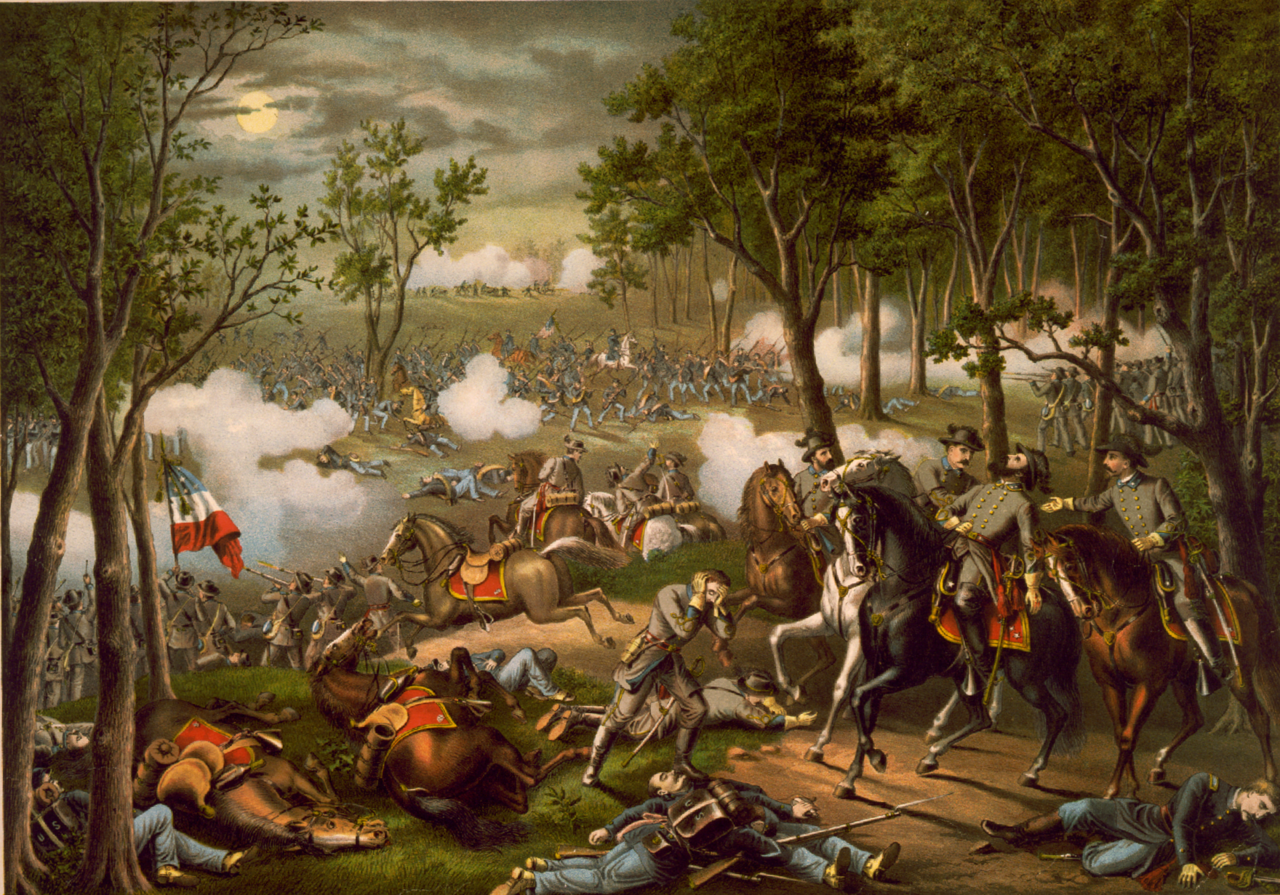
Battle of Franklin, 1864 by Kurz and Allison. Restoration by Adam Cuerden [Wikimedia Commons]

The third of Trevor Dupuy’s Timeless Verities of Combat is:

Defensive posture is necessary when successful offense is impossible.

From Understanding War (1987):

Even though offensive action is essential to ultimate combat success, a combat commander opposed by a more powerful enemy has no choice but to assume a defensive posture. Since defensive posture automatically increases the combat power of his force, the defending commander at least partially redresses the imbalance of forces. At a minimum he is able to slow down the advance of the attacking enemy, and he might even beat him. In this way, through negative combat results, the defender may ultimately hope to wear down the attacker to the extent that his initial relative weakness is transformed into relative superiority, thus offering the possibility of eventually assuming the offensive and achieving positive combat results. The Franklin and Nashville Campaign of our Civil War, and the El Alamein Campaign of World War II are examples.

Sometimes the commander of a numerically superior offensive force may reduce the strength of portions of his force in order to achieve decisive superiority for maximum impact on the enemy at some other critical point on the battlefield, with the result that those reduced-strength components are locally outnumbered. A contingent thus reduced in strength may therefore be required to assume a defensive posture, even though the overall operational posture of the marginally superior force is offensive, and the strengthened contingent of the same force is attacking with the advantage of superior combat power. A classic example was the role of Davout at Auerstadt when Napoléon was crushing the Prussians at Jena. Another is the role played by “Stonewall” Jackson’s corps at the Second Battle of Bull Run. [pp. 2-3]

This verity is both derivative of Dupuy’s belief that the defensive posture is a human reaction to the lethal environment of combat, and his concurrence with Clausewitz’s dictum that the defense is the stronger form of combat. Soldiers in combat will sometimes reach a collective conclusion that they can no longer advance in the face of lethal opposition, and will stop and seek cover and concealment to leverage the power of the defense. Exploiting the multiplying effect of the defensive is also a way for a force with weaker combat power to successfully engage a stronger one.

It also relates to the principle of war known as economy of force, as defined in the 1954 edition of the U.S. Army’s Field Manual FM 100-5, Field Service Regulations, Operations:

Minimum essential means must be employed at points other than that of decision. To devote means to unnecessary secondary efforts or to employ excessive means on required secondary efforts is to violate the principle of both mass and the objective. Limited attacks, the defensive, deception, or even retrograde action are used in noncritical areas to achieve mass in the critical area.

These concepts are well ingrained in modern U.S. Army doctrine. FM 3-0 Operations (2017) summarizes the defensive this way:

Defensive tasks are conducted to defeat an enemy attack, gain time, economize forces, and develop conditions favorable for offensive or stability tasks. Normally, the defense alone cannot achieve a decisive victory. However, it can set conditions for a counteroffensive or counterattack that enables Army forces to regain and exploit the initiative. Defensive tasks are a counter to enemy offensive actions. They defeat attacks, destroying as much of an attacking enemy as possible. They also preserve and maintain control over land, resources, and populations. The purpose of defensive tasks is to retain key terrain, guard populations, protect lines of communications, and protect critical capabilities against enemy attacks and counterattacks. Commanders can conduct defensive tasks to gain time and economize forces, so offensive tasks can be executed elsewhere. [Para 1-72]

UPDATE: Just as I posted this, out comes a contrarian view from U.S. Army CAPT Brandon Morgan via the Modern War Institute at West Point blog. He argues that the U.S. Army is not placing enough emphasis on preparing to conduct defensive operations:

In his seminal work On War, Carl von Clausewitz famously declared that, in comparison to the offense, “the defensive form of warfare is intrinsically stronger than the offensive.”

This is largely due to the defender’s ability to occupy key terrain before the attack, and is most true when there is sufficient time to prepare the defense. And yet within the doctrinal hierarchy of the four elements of decisive action (offense, defense, stability, and defense support of civil authorities), the US Army prioritizes offensive operations. Ultimately, this has led to training that focuses almost exclusively on offensive operations at the cost of deliberate planning for the defense. But in the context of a combined arms fight against a near-peer adversary, US Army forces will almost assuredly find themselves initially fighting in a defense. Our current neglect of deliberate planning for the defense puts these soldiers who will fight in that defense at grave risk.

Panzer Aces Wittmann and Staudegger at Kursk – part 2

My previous post on this subject looked at the claims of two panzer aces made on the 5th of July 1943. Let me address a couple of more claims credited to Michael Wittmann (1914-1944) and Franz Staudegger (1923-1991).

  1. It is claimed that Wittmann killed two T-34s, two SU-122s and 3 T-60s/T-70s on 7 and 8 July 1943.
    1. Sources of these claims:
      1. http://www.solargeneral.org/wp-content/uploads/library/michael-wittmann.pdf
      2. http://ww2live.com/en/content/world-war-2-when-fierce-soviet-resistance-wasnt-trouble-michael-wittmann-panzer-ace-black
      3. https://www.sofmag.com/tiger-tank-ace-michael-wittmann-destroying-30-soviet-tanks-in-battle-of-kursk-july-1943/
      4. http://panzervor.com/index/wittm.html
      5. and there are others.
    2. These claims are not mentioned in Agte’s book on Wittmann.

The challenge here is finding where those SU-122s were. They were:

  1. The 1440th SP Artillery Rgt that was attached to the 67th GRD, opposite the German 48th Panzer Corps and probably lost most of its armor on the 5th.
    1. The Germans report that the Gross Deutschland Panzer Rgt encountered Su-122s on 7 July (see my Kursk book, page 510).
    2. On the 11th of July the XXXII Guards Rifle Corps had the 1440th SP Artillery Rgt attached to it, which had 2 SU-76s and 7 SU-122s ready for action (14 Su-76s and 8 SU-122s total).
    3. An unscathed Su-122 was found around Tolstoye Woods and handed over the 3rd Panzer Division for its use (see Kursk, page 1078).
  2. The 1438th SP Artillery Rgt that was part of the Seventh Guards Army and clearly never faced the SS. It has 9 Su-76s and 12 Su-122s.
  3. The 1447th SP Artillery Rgt which was part of the V Guards Mechanized Corps and still had 9 Su-75s and 12 Su-122 as of 11 July.
  4. The 1461st SP Artillery Rgt attached to the First Tank Army and was part of VI Tank Corps. It was far from the SS Panzer Corps.
  5. The XXIX Tank Corps has 12 Su-122s. But the corps did not see battle until 12th of July. They lost nine of them on 12 July (see Kursk, page 951).

Therefore, by default, the 1438th, 1447th, 1461 SP Art Rgts and XXIX Tank Corps Su-122 would have never encountered the SS. The 1440th may have, but the 67th Guards Rifle Division and XXXII Guards Rifle Corps was primarily opposite the 11th Panzer Division. As the LSSAH was to the east of the 11th Panzer Division, it is possible that it could have been engaged by the LSSAH and Michael Wittmann. Overall, the claims for 7 and 8 July were possible. Do not know how probable they are.

Will address the claims for Staudegger in a subsequent post.

P.S. The first picture is of from Kubinka Tank Museum in Moscow Oblast. Not sure where the second picture of a German Su-122 came from, it was in an image gallery. Also see these links:

  1.  http://www.tanks-encyclopedia.com/ww2/soviet/soviet_SU-122.php
  2. http://russian-tanks.com/su-122.php
  3. https://www.worldwarphotos.info/gallery/ussr/spg/su-122/

Another Look At The Role Of Russian Mercenaries In Syria

Russian businessman Yevgeny Prigozhin and Russian President Vladimir Putin. Prigozhin—who reportedly has ties to Putin, the Russian Ministry of Defense, and Russian mercenaries—was indicted by Special Counsel Robert Mueller on 16 February 2018 for allegedly funding and guiding a Russian government effort to interfere with the 2016 U.S. presidential election. [Alexei Druzhinin/AP]

As I recently detailed, many details remain unclear regarding the 7 February 2018 engagement in Deir Ezzor, Syria, between Russian mercenaries, Syrian government troops, and militia fighters and U.S. Special Operations Forces, U.S. Marines, and their partnered Kurdish and Syrian militia forces. Aside from questions as to just how many Russians participated and how many were killed, the biggest mystery is why the attack occurred at all.

Kimberly Marten, chair of the Political Science Department at Barnard College and director of the Program on U.S.-Russia Relations at Columbia University’s Harriman Institute, takes another look at this in a new article on War on the Rocks.

Why did Moscow initially deny any Russians’ involvement, and then downplay the casualty numbers? And why didn’t the Russian Defense Ministry stop the attackers from crossing into the American zone, or warn them about the likelihood of a U.S. counterstrike? Western media have offered two contending explanations: that Wagner acted without the Kremlin’s authorization, or that this was a Kremlin-approved attack that sought to test Washington while maintaining plausible deniability. But neither explanation fully answers all of the puzzles raised by the publicly available evidence, even though both help us understand more generally the opaque relationship between the Russian state and these forces.

After reviewing what is known about the relationship between the Russian government and the various Russian mercenary organizations, Marten proposes another explanation.

A different, or perhaps additional, rationale takes into account the ruthless infighting between Russian security forces that goes on regularly, while Russian President Vladimir Putin looks the other way. Russian Defense Ministry motives in Deir al-Zour may actually have centered on domestic politics inside Russia — and been directed against Putin ally and Wagner backer Yevgeny Prigozhin.

She takes a detailed look at the institutional relationships in question and draws a disquieting conclusion:

We may never have enough evidence to solve definitively the puzzles of Russian behavior at Deir al-Zour. But an understanding of Russian politics and security affairs allows us to better interpret the evidence we do have. Since Moscow’s employment of groups like Wagner appears to be a growing trend, U.S. and allied forces should consider the possibility that in various locations around the world, they might end up inadvertently, and dangerously, ensnared in Russia’s internal power struggles.

As with the Institute for the Study of War’s contention that the Russians are deliberately testing U.S. resolve in the Middle East, Marten’s interpretation that the actions of various Russian mercenary groups might be the result of internal Russian politics points to the prospect of further military adventurism only loosely connected to Russian foreign policy direction. Needless to say, the implications of this are ominous in a region of the world already beset by conflict and regional and international competition.

Panzer Aces Wittmann and Staudegger at Kursk – part 1

Two of the top panzer aces at the Battle of Kursk were Michael Wittmann (1914-1944) and Franz Staudegger (1923-1991). They were both in the heavy panzer company (armed with Tiger Is) of the Leibstandarte SS Adolf Hitler Panzer Grenadier Division (LSSAH or LSSAH PzGrD). I only briefly addressed them in my Kursk book. I now find myself going back over their efforts.

The problem is that while there are very detailed narratives on their actions from 5-12 July 1943, there are unresolved issues with these narratives. Let me address a couple of them:

  1. It is claimed that Wittmann killed 8 T-34s and 7 AT guns on 5 July 1943 (source: Agte, page 96, 126).
    1. Some accounts say 12. For example: https://www.warhistoryonline.com/world-war-ii/top-7-facts-about-michael-wittmann-the-biggest-panzer-ace-in-wwii.html
    2. Some accounts say 13 T-34s and 2 AT guns.
  2. It is claimed that Staudegger killed two tanks (T-34s?) the evening of 5 July in close combat. (source: Agte, pages 98-99)
    1. Some accounts say it was a T-34. For example: https://www.warhistoryonline.com/guest-bloggers/franz-staudegger-german-tiger-ace-battle-kursk.html
    2. and http://ftr.wot-news.com/2013/09/04/staudeggers-run/

First of all, the unusually high German claims are the Eastern Front are often believable because of the unusually high losses by the Soviet Union. It often becomes difficult to disprove any claims. For example, on page 875 of my Kursk book I examine the German claims of tank kills compared to actual Soviet losses.

The biggest problem with the claims of killing T-34s on 5 July was that there was not many (if any) T-34s in and around the SS Panzer Corps on that day. The German accounts state that they were facing dug-in T-34s in their attack on 5 July (see Agte, pages 93, 95, 96 and 97). The attack of the LSSAH was in the area of Byikovka against the 52nd Guards Rifle Division, Sixth Guards Army. The armor units attached to the Sixth Guards Army were: 1) the 230th Tank Regiment, 2) the 245th Tank Regiment, 3) 1440th Self-Propelled Artillery Regiment, and 4) the 96th Tank Brigade. The 245th Tank Regiment was armed with 27 U.S. built M-3 Stuart tanks and 12 U.S. built M-3 Grants. The 96th Tank Brigade had 5 T-70s and 46 T-34s. We did not have detailed unit records for the other two regiments, but we assumed for the Kursk Data Base (KDB) that the 230th Tank Regiment was also armed with American built tanks. Valerii Zamulin in his book has the 230th Tank Regiment with 32 Stuarts and 7 Lees (one in repair) on 1 June 1943. He also confirmed in a meeting with me at the now out-of-business Grevey’s Sports Bar that they were armed with American tanks. Zamulin’s book shows the 1440th Self-Propelled Artillery Regiment on 1 June 1943 with 9 T-70s (one in repair) and 12 T-34s, but adds a footnote that states that at the beginning of the Kursk offensive the regiment was given a complete standard complement of a mix of 21 Su-76 and Su-122s. That is also what we had originally assumed (see Kursk: page 145).

So, to summarize, only one unit attached to the Sixth Guards Army, the 96th Tank Brigade, was armed with T-34s. This unit was located northeast of Belgorod, attached to the 375th Rifle Division, but to the east of Gostishchevo and behind (to the NE) of the 81st Guards Rifle Division (Seventh Guards Army). The SS Panzer Corps was deployed with the LSSAH on its left (west), the Das Reich SS Panzer Grenadier Division (DR) in the center and the Totenkopf SS Panzer Grenadier Division (T) on the right. The Sixth Guards Army was deployed with the 52nd Guards Rifle Division opposite both LSSAH and DR and to its east was the 375th Rifle Division, opposite T PzGrD. The 245th Tank Regiment we have records for and it appears that it lost most of its tanks on 5 July. They were to the west of the SS Panzer Corps, opposite the German 48th Panzer Corps. The accounts and interviews we did from the units of the 48th Panzer Corps reported American tanks there. The 1440th SP Artillery Regiment was attached to the 67th Guards Rifle Division, which was also opposite the 48th Panzer Corps. Certainly, in the morning of 5 July, it raises the question of which, if any, T-34s could have been engaged.

Now, we do have the records of the 96th Tank Brigade. It reports for 5 July that the moved on the 5th to defend the Lipovyii Donets crossings of the Nepkhayevo, Visloye and Ternovka. This is in the area of the T SS PzGrD. They report no losses on the 5th. They specifically state “No tank losses” on the 6th (TSAMO, Fond: 3191, Opis: 1, Delo: 3, pages 15-17). On July 8 they report a strength of 46 T-34s and 6 T-70s, so they had gained 1 T-70 since 4 July. They also reported their first losses (3 tanks burned and 3 knocked-out).

There were units moving up to the Soviet second defensive echelon. The 1st Guards Tank Brigade of the III Mechanized Corps was moving up to the left of the SS Panzer Corps. They report that they lost one T-34 at 23:30 on 5 July. This is discussed in my Kursk book on page 754. The biggest armored formation in the area was the excellently lead II Guards Tank Corps. It was to the NE of Belgorod, behind the 96th Guards Tank Brigade. It not receive orders to move on the 5th of July until 1635 (Kursk: 417).  The corps was deployed along the Lipovyii Donets at 0400 (Moscow time) on the 6th of July (Kursk: 473), which would put it facing T PzGrD.

Therefore, one of five things occurred:

  1. The 230th Tank Regiment was armed with T-34s (not likely)
  2. The 1440th SP Artillery Regiment was armed with 12 T-34s and saw action against the LSSAH (not likely).
  3. The 96th Tank Brigade saw significant action on the 5th (not likely).
  4. There were unreported T-34s that were part of the rifle divisions (not likely).
  5. The Germans were killing American tanks and claiming them as T-34s (most likely).

Finally one must consider the count. It appear that there were only around 39 tanks in the 230th Tank Regiment. The accounts published never mention any assault guns encountered on the 5th of July. Assuming 30 tanks from the 230th Tank Regiment were lost this day (which is what we assumed for the KDB), then did indeed Michael Wittmann kill 8 of them (27 percent)? Keep in mind this Soviet armor unit was facing two SS Panzer Grenadier Divisions, both of similar size and armament. Furthermore, Wittmann’s tank company was one of eight tank companies in his division, and one of 16 tank companies among these two divisions, plus there were 6 or so assault gun companies, four infantry regiments, many anti-tank guns, significant artillery, massive air support, etc. So could Wittmann have really killed 27 percent of the tanks the SS Panzer Corps faced that day, or his company killed 23 Soviet tanks (Kusk: page 392) or around 77 percent of the tanks the SS Panzer Corps faced that day? It is possible. Not sure how probable it is.

So, there are a lot of other experts out there. Please let me know where I might be wrong in questioning this.


P.S.

  1. The first picture is of Michael Wittmann, but colorized. It is from this site: http://www.ww2incolor.com/colorizations/MW8.html
  2. The second picture is supposedly of Michael Wittmann, but no claims as such, nor time and place. See: http://keywordsuggest.org/gallery/827239.html
  3. Picture of a Grant, although not from the Eastern Front.
  4. Picture of a Stuart, not from the Eastern Front.
  5. Picture of a T-34/76. See: http://weaponsman.com/?p=10924

P.P.S.: Some accounts of such claims:

Patrick Agte, Michael Wittmann: And the Waffen SS Tiger Commanders of the Leibstandarte in WWII: Volume One (Stackpole Books, Mechanicsburg, PA., 1996).

Also see my Kursk book, pages 145, 148, 267, 270, 271, 274, 284, 286, 392, 394, 395, 402, 417, 447, 473, 474, 754

U.S. Military Deaths from 2006

Interesting chart from the Congressional Research Service (CRS). Source: https://fas.org/sgp/crs/natsec/IF10899.pdf

OCO Deaths = Overseas Contingency Operations — meaning mostly Iraq and Afghanistan.

Non-OCO Deaths = means mostly accident, self-inflicted wounds, and illness. There are the almost 1,000 deaths a year that are going to occur in the U.S. military even when at peace. They listed accidents as 4,599 cases, self-inflicted deaths as 3,258 cases and illness/injury as 2,650 cases. Note that OCO operations also include accidents (471), self-inflicted wounded (282) and illness and injury (119). There are also 458 homicides in non-OCO and 41 homicides among the OCO deaths (along with 2,698 killed in action and 874 died of wounds).

It would have been more interesting if they started those charts in 2000 or 2001.

A few other interesting charts from that link:

The chart below is Iraq war deaths from 2006. Total Iraq war deaths since 2003 were over 4,500.

And these are Afghanistan war deaths from 2006. Total Afghanistan war deaths since 2001 add up to over 2,300.

These are, of course, only U.S. DOD deaths. There are also U.S. contractors, NATO allies, other U.S. allies, Iraq and Afghanstani forces, militia, civilians, insurgents, etc. It starts adding up.

Back To The Future: The Return Of Sieges To Modern Warfare

Ruins of the northern Syrian city of Aleppo, which was besieged by Syrian government forces from July 2012 to December 2016. [Getty Images]

U.S. Army Major Amos Fox has published a very intriguing analysis in the Association of the U.S. Army’s Institute of Land Warfare Landpower Essay series, titled “The Reemergence of the Siege: An Assessment of Trends in Modern Land Warfare.” Building upon some of his previous work (here and here), Fox makes a case that sieges have again become a salient feature in modern warfare: “a brief survey of history illustrates that the siege is a defining feature of the late 20th and early 21st centuries; perhaps today is the siege’s golden era.”

Noting that neither U.S. Army nor joint doctrine currently addresses sieges, Fox adopts the dictionary definition: “A military blockade of a city or fortified place to compel it to surrender, or a persistent or serious attack.” He also draws a distinction between a siege and siege warfare; “siege warfare implies a way of battle, whereas a siege implies one tool of many in the kitbag of warfare.” [original emphasis]

He characterizes modern sieges thusly:

The contemporary siege is a blending of the traditional definition with concentric attacks. The modern siege is not necessarily characterized by a blockade, but more by an isolation of an adversary through encirclement while maintaining sufficient firepower against the besieged to ensure steady pressure. The modern siege can be terrain-focused, enemy-focused or a blending of the two, depending on the action of the besieged and the goal of the attacker. The goal of the siege is either to achieve a decision, whether politically or militarily, or to slowly destroy the besieged.

He cites the siege of Sarajevo (1992-1996) as the first example of the modern phenomenon. Other cases include Grozny (1999-2000); Aleppo, Ghouta, Kobani, Raqaa, and Deir Ezzor in Syria (2012 to 2018); Mosul (2016-2017); and Ilovaisk, Second Donetsk Airport, and Debal’tseve in the Ukraine (2014-present).

Fox notes that employing sieges carries significant risk. Most occur in urban areas. The restrictive nature of this terrain serves as a combat multiplier for inferior forces, allowing them to defend effectively against a much larger adversary. This can raise the potential military costs of conducting a siege beyond what an attacker is willing or able to afford.

Modern sieges also risk incurring significant political costs through collateral civilian deaths or infrastructure damage that could lead to a loss of international credibility or domestic support for governments that attempt them.

However, Fox identifies a powerful incentive that can override these disadvantages: when skillfully executed, a siege affords an opportunity for an attacker to contain and tie down defending forces, which can then be methodically destroyed. Despite the risks, he believes the apparent battlefield decisiveness of recent sieges means they will remain part of modern warfare.

Given modern sieges’ destructiveness and sharp impact on the populations on which they are waged, almost all actors (to include the United States) demonstrate a clear willingness—politically and militarily—to flatten cities and inflict massive suffering on besieged populations in order to capitalize on the opportunities associated with having their adversaries centralized.

Fox argues that sieges will be a primary tactic employed by proxy military forces, which are currently being used effectively by a variety of state actors in the Eastern Europe and the Middle East. “[A]s long as intermediaries are doing the majority of fighting and dying within a siege—or holding the line for the siege—it is a tactic that will continue to populate current and future battlefields.”

This is an excellent analysis. Go check it out.

The Combat Value of Surprise

American soldiers being marched down a road after capture by German troops in the Ardennes, December 1944.

[This article was originally posted on 1 December 2016]

In his recent analysis of the role of conventional armored forces in Russian hybrid warfare, U.S. Army Major Amos Fox noted an emphasis on tactical surprise.

Changes to Russian tactics typify the manner in which Russia now employs its ground force. Borrowing from the pages of military theorist Carl von Clausewitz, who stated, “It is still more important to remember that almost the only advantage of the attack rests on its initial surprise,” Russia’s contemporary operations embody the characteristic of surprise. Russian operations in Georgia and Ukraine demonstrate a rapid, decentralized attack seeking to temporally dislocate the enemy, triggering the opposing forces’ defeat.

Tactical surprise enabled by electronic, cyber, information and unconventional warfare capabilities, combined with mobile and powerful combined arms brigade tactical groups, and massive and lethal long-range fires provide Russian Army ground forces with formidable combat power.

Trevor Dupuy considered the combat value of surprise to be important enough to cite it as one of his “timeless verities of combat.”

Surprise substantially enhances combat power. Achieving surprise in combat has always been important. It is perhaps more important today than ever. Quantitative analysis of historical combat shows that surprise has increased the combat power of military forces in those engagements in which it was achieved. Surprise has proven to be the greatest of all combat multipliers. It may be the most important of the Principles of War; it is at least as important as Mass and Maneuver.

In addition to acting as combat power multiplier, Dupuy observed that surprise decreases the casualties of a surprising force and increases those of a surprised one. Surprise also enhances advance rates for forces that achieve it.

In his combat models, Dupuy categorized tactical surprise as complete, substantial, and minor; defining the level achieved was a matter of analyst judgement. The combat effects of surprise in battle would last for three days, declining by one-third each day.

He developed two methods for applying the effects of surprise in calculating combat power, each yielding the same general overall influence. In his original Quantified Judgement Model (QJM) detailed in Numbers, Predictions and War: The Use of History to Evaluate and Predict the Outcome of Armed Conflict (1977), factors for surprise were applied to calculations for vulnerability and mobility, which in turn were applied to the calculation of overall combat power. The net value of surprise on combat power ranged from a factor of about 2.24 for complete surprise to 1.10 for minor surprise.

For a simplified version of his combat power calculation detailed in Attrition: Forecasting Battle Casualties and Equipment Losses in Modern War (1990), Dupuy applied a surprise combat multiplier value directly to the calculation of combat power. These figures also ranged between 2.20 for complete surprise and 1.10 for minor surprise.

Dupuy established these values for surprise based on his judgement of the difference between the calculated outcome of combat engagements in his data and theoretical outcomes based on his models. He never validated them back to his data himself. However, TDI President Chris Lawrence recently did conduct substantial tests on TDI’s expanded combat databases in the context of analyzing the combat value of situational awareness. The results are described in detail in his forthcoming book, War By Numbers: Understanding Conventional Combat.