This reflects its unconventional origins. Under normal circumstances, such work would be undertaken by either the U.S. Army Combat Studies Institute (CSI), which is charged with writing quick-turnaround “instant histories,” or the U.S. Army Center of Military History (CMH), which writes more deeply researched “official history,” years or decades after the fact.[1] Instead, these volumes were directly commissioned by then-Chief of the Staff of the Army, General Raymond Odierno, who created an Iraq Study Group in 2013 to research and write them. According to Odierno, his intent was “to capture key lessons, insights, and innovations from our more than 8 years of conflict in that country.[I]t was time to conduct an initial examination of the Army’s experiences in the post-9/11 wars, to determine their implications for our future operations, strategy, doctrine, force structure, and institutions.”
Although the Iraq Study Group completed its work in June 2016 and the first volume of the history was scheduled for publication that October, its release was delayed due to concerns within the Army historical community regarding the its perspective and controversial conclusions. After external reviewers deemed the study fair and recommended its publication, claims were lodged after its existence was made public last autumn that the Army was suppressing it to avoid embarrassment. Making clear that the study was not an official history publication, current Army Chief of Staff General Mark Milley added his own forward to Odierno’s, and publicly released the two volumes yesterday.
The biggest problem with the kill claims related to the Leibstandarte SS Adolf Hitler (LSSAH) Division’s Tiger company on 5 July 1943 is that they claim dozens of T-34s killed on the 5th of July, when there were few in the area.
There were no units armed with T-34s that were attached to the Sixth Guards Army, and the armored units in the area with T-34s were not in action for most of the 5th (this would include the III Mechanized Corps and the II Guards Tank Corps). So either the LSSAH Tigers shot up a lot of M-3 Lees and Stuarts and they have become T-34s in the retelling, or the claims are just grossly inflated or flat out wrong.
But….there may have been a few T-34s in the area. According to the March-April 1944 Soviet General Staff Study done on Kursk, 10 or 15 tanks were deployed in the fortified areas as part of the defense. See page 284 of my Kursk book. But, in the unit records we had, we never had a report on them (including in the Sixth Guards Army records). We have not seen any record of them other than the single report in the General Staff Study.
So there were 10 or 15 tanks deployed in the fortified areas. They do not say where and what types of tanks. It could have been T-34s in the Sixth Guards Army area….or it could not be. They could have been deployed together or scattered.
There are a few reports of dug-in T-34s on 4 and 5 July 1943.
Guenther Baer, II Battalion of the LSSAH Tank Regiment, reports for the 4th of July, the pre-battle evening clearing attack on the Soviet outpost line that:
We also came upon scattered dug-in T-34s, who were then quickly disabled by our own tanks. (page 282…interview was done in 1999 by MG Dieter Brand).
Lt. Franz-Joachim von Rodde, an adjutant with the 6th Panzer Regiment, 3rd Panzer Division reports that:
That evening [5 July]…penetrated all the way to a small village [Krasnyii Pochinok] along a narrow front line and staggered towards the rear. The village itself could not be taken in time, though. Here we encountered T-34s dug-in up to their turrets for the first time. (page 367…interview was done in 1999 by MG Dieter Brand).
As I note on page 368:
Lt. Rodde’s memory of T-34s dug-in around Krasnyii Pochinok cannot be confirmed. The Soviet 245th Tank Regiment did not have T-34s. The nearest forces with T-34s would be the 59th and 60th Tank Regiment attached to the Fortieth Army. While these forces may well have been in the area (as this is not the only report of tanks we have on the front line of the 71st Guard Rifle Division, 67th Guards Rifle Division, or the Fortieth Army units), we have not accounts of them being there in the Soviet records.
Just to continue Rodde’s quote:
This was another measure hitherto unknown. These dug-in tanks were very dangerous. They were camouflaged extremely well–as usual with the Russians–and could only be reconnoitered once they opened fire. They usually fired at short range so as to have a maximum chance of hitting something.
Then there also the reports of dug-in tanks from Alfred Rubbel, 503rd Heavy Panzer (Tiger) Battalion, in the area where the 6th Panzer Division was attacking on the 5th, but this is out of the area of our concern (see page 403). Still just to quote:
Our Tiger company suffered the first losses as well. For the first time we saw dug-in enemy tanks in this sector. In a way this was a surprise as that was a use of tanks not at all typical. There dug-in tanks were firing with great precision from their position and were thus very dangerous for us. On that day alone, we have four losses due to enemy fire, which could all be recovered but nevertheless represented the highest number of losses in one day of battle we had to absorb during the entire operation.
Those tanks were most likely from the Soviet 262nd Tank Regiment, which started the battle with 22 KV-1s.
So we have reports of dug-in T-34s in front of the LSSAH Division and in front of 3rd Panzer Division. These are two widely separated locations. So it is distinctly possible that the SS Panzer Corps could have encountered 6-9 dug-in T-34s. This is still considerably less than what they claim, but probably there is some basis to their claims. Still, it would appear that they, or subsequent authors, either over-claimed or credited every tanks as destroyed as being a T-34, even though most were not.
Hard to sort it out 75 years after the fact…..but it is clear that many of the published claims for 5 July 1943 are not correct.
Suicide bomber in Baghlan Jadid, April 2009. Photo by William A. Lawrence II
The charts looking at force ratios created by our regression analysis of 83 cases were very much based on insurgent cause, a subject that a lot of counterinsurgency analysts gloss over. The question is whether the insurgency is based upon a central political idea (like nationalism), an overarching idea (an ideology like communism) and a limited developed political thought (a regional or factional insurgency). This very much changes the difficulty of suppressing the insurgency. It also changes the odds of winning. The force levels and sometimes duration of insurgencies were significantly different for these cases. In my book America’s Modern Wars I end up spending three chapters on this subject: Chapter 4: Force Ratios Really Do Matter, Chapter 5: Cause Really is Important and Chapter 6: The Two Together Seem Really Important.
Now, this came up when we were doing our estimate in 2004 of U.S. casualties and the duration of an insurgency in Iraq (which is in Chapter 1 of my book). In this case we have a country that was maybe 60% Shiite Muslim and an insurgency that was centered around the population of around 20% Sunni Muslim. Was this a regional or factional insurgency? Probably. We built that estimate on only 28 cases (because, you know, research takes time). In those cases that were based upon a central political idea, the insurgents won 75% of the time. In those cases that were based upon a limited political idea, the insurgents did not win in any of those cases. This is a big, and very noticeable difference. It was the one bright spot in my briefings (as people weren’t too excited about my conclusions that we would loose 5,000+ and it would take 10+ years…as that was not what was being promised by our political leaders in 2004).
The challenge is sorting out which applies to Afghanistan. There is no question that when they were fighting the Soviet Union, it was based upon a central political idea (nationalism). The question is, what is this insurgency based upon?
Part of the problem in sorting out what is happening in Afghanistan is that the country’s demographics are very complex. For example 42% of the population is Pashtun, 33% is Tajik, 9% is Hazara (who are usually Shiite Muslims), 9% are Uzbek, 4% Aimek, 3% Trukmen, 2% Baloch and 4% others (source World Factbook, 2013 estimate, courtesy of Wikipedia).
Language is a little better with 80% speaking Dari, which is Persian or Farsi. 47% speak Pashto, the native tongue of Pashtuns. 5% speak English.
The country is usually considered 85-90% Sunni Muslim and 7-15% Shiite Muslim.
A 2018 population estimate for Afghanistan is 31,575,018 (pretty precise for an estimate).
The insurgents tend to also be separated in a bewildering array of groups (as was also the case when they were fighting the Soviet Union). Some of the insurgent groups are:
Taliban: These are the previous rulers of Afghanistan. Was close to Al-Qaeda.
Haqqani Network: Offshoot of the Taliban. Al-Qaeda affiliate.
Fidal Mahaz: Splinter group from the Taliban
IEHCA: Splinter group from the Taliban
HIG: Gulbuddin Hekmatyar group, who has been doing this since 1980s. He signed a peace agreement with the Afghan government in 2016.
IMU: Originally an Uzbek movement.
Islamic Jihad Union (IJU): Militant Islamist organization. Split off from IMU. Al-Qaeda affiliate
ETIM: Uyghurs from China.
LeJ: anti-Shiite group
Pakistani Taliban or TTP: Primarily focused on Pakistan
Lel: Primarily focused on Pakistan
ISIL-KP: Islamic state affilliate.
This is a quickly cobbled together list. Some with more expertise are welcome to add or modify this list.
Wikipedia does give strengths for some of these groups. Have no idea how accurate they are:
Taliban: 60,000
Haqqani Network: 4,000-15,000
Fidai Mahaz: 8,000
IEHCA: 3,00-3,500
HIG: 1,500-2,200+
al-Qaeda: 50-100
So….when I was coding the over 100 cases that we now have in our database, it was relatively easy to determine if an insurgency was based upon a central idea, or an overarching idea or was regional or factional. There was very little debate in most cases.
On the other…..it is a little harder to tell what it should be in this particular case.
There is an 37-year old organization called the New York Military Affair Symposium that regular hosts speakers. Their website and speaker schedule is here: http://www.nymas.org/
This Friday (Jan 18), Max Boot will be presenting about his book The Road Not Taken: Edward Lansdale and the American Tragedy in Vietnam.
I will be presenting on 26 April based upon my book War by Numbers: Understanding Conventional Combat.
The presentations are at the Soldier Sailors Club, 283 Lexington Avenue, New York City at 7 PM.
The current military and anti-access/area denial situation in Eastern Europe. [Map and overlay derived from situation map by Thomas C. Thielen (@noclador) https://twitter.com/noclador/status/1079999716333703168; and Ian Williams, “The Russia – NATO A2AD Environment,” Missile Threat, Center for Strategic and International Studies, published January 3, 2017, last modified November 29, 2018, https://missilethreat.csis.org/russia-nato-a2ad-environment/]
[T]he US Army is mistakenly structuring for offensive clashes of mass and scale reminiscent of 1944 while competitors like Russia and China have adapted to twenty-first-century reality. This new paradigm—which favors fait accompli acquisitions, projection from sovereign sanctuary, and indirect proxy wars—combines incremental military actions with weaponized political, informational, and economic agendas under the protection of nuclear-fires complexes to advance territorial influence…
These factors suggest, cumulatively, that the advantage in military confrontation between great powers has decisively shifted to those that combine strategic offense with tactical defense.
As a consequence, the authors suggested that “the US Army should recognize the evolved character of modern warfare and embrace strategies that establish forward positions of advantage in contested areas like Eastern Europe and the South China Sea. This means reorganizing its current maneuver-centric structure into a fires-dominant force with robust capacity to defend in depth.”
Forward Defense, Active Defense, and AirLand Battle
To illustrate their thinking, Jennings, Fox, and Taliaferro invoked a specific historical example:
This strategic realignment should begin with adopting an approach more reminiscent of the US Army’s Active Defense doctrine of the 1970s than the vaunted AirLand Battle concept of the 1980s. While many distain (sic) Active Defense for running counter to institutional culture, it clearly recognized the primacy of the combined-arms defense in depth with supporting joint fires in the nuclear era. The concept’s elevation of the sciences of terrain and weaponry at scale—rather than today’s cult of the offense—is better suited to the current strategic environment. More importantly, this methodology would enable stated political aims to prevent adversary aggression rather than to invade their home territory.
In the article’s comments, many pushed back against reviving Active Defense thinking, which has apparently become indelibly tarred with the derisive criticism that led to its replacement by AirLand Battle in the 1980s. As the authors gently noted, much of this resistance stemmed from the perceptions of Army critics that Active Defense was passive and defensively-oriented, overly focused on firepower, and suspicions that it derived from operations research analysts reducing warfare and combat to a mathematical “battle calculus.”
While AirLand Battle has been justly lauded for enabling U.S. military success against Iraq in 1990-91 and 2003 (a third-rank, non-nuclear power it should be noted), it always elided the fundamental question of whether conventional deep strikes and operational maneuver into the territory of the Soviet Union’s Eastern European Warsaw Pact allies—and potentially the Soviet Union itself—would have triggered a nuclear response. The criticism of Active Defense similarly overlooked the basic political problem that led to the doctrine in the first place, namely, the need to provide a credible conventional forward defense of West Germany. Keeping the Germans actively integrated into NATO depended upon assurances that a Soviet invasion could be resisted effectively without resorting to nuclear weapons. Indeed, the political cohesion of the NATO alliance itself rested on the contradiction between the credibility of U.S. assurances that it would defend Western Europe with nuclear weapons if necessary and the fears of alliance members that losing a battle for West Germany would make that necessity a reality.
Forward Defense in Eastern Europe
A cursory look at the current military situation in Eastern Europe along with Russia’s increasingly robust anti-access/area denial (A2/AD) capabilities (see map) should clearly illustrate the logic behind a doctrine of forward defense. U.S. and NATO troops based in Western Europe would have to run a gauntlet of well protected long-range fires systems just to get into battle in Ukraine or the Baltics. Attempting operational maneuver at the end of lengthy and exposed logistical supply lines would seem to be dauntingly challenging. The U.S. 2nd U.S. Cavalry ABCT Stryker Brigade Combat Team based in southwest Germany appears very much “lone and lonely.” It should also illustrate the difficulties in attacking the Russian A2/AD complex; an act, which Jennings, Fox, and Taliaferro remind, that would actively court a nuclear response.
In this light, Active Defense—or better—a MDO doctrine of forward defense oriented on “a fires-dominant force with robust capacity to defend in depth,” intended to “enable stated political aims to prevent adversary aggression rather than to invade their home territory,” does not really seem foolishly retrograde after all.
A great deal of importance has been placed on the knowledge derived from these activities. As the U.S. Army Training and Doctrine Command recently stated,
Concept analysis informed by joint and multinational learning events…will yield the capabilities required of multi-domain battle. Resulting doctrine, organization, training, materiel, leadership, personnel and facilities solutions will increase the capacity and capability of the future force while incorporating new formations and organizations.
There is, however, a problem afflicting the Defense Department’s wargames, of which the military operations research and models and simulations communities have long been aware, but have been slow to address: their models are built on a thin foundation of empirical knowledge about the phenomenon of combat. None have proven the ability to replicate real-world battle experience. This is known as the “base of sand” problem.
A Brief History of The Base of Sand
All combat models and simulations are abstracted theories of how combat works. Combat modeling in the United States began in the early 1950s as an extension of military operations research that began during World War II. Early model designers did not have large base of empirical combat data from which to derive their models. Although a start had been made during World War II and the Korean War to collect real-world battlefield data from observation and military unit records, an effort that provided useful initial insights, no systematic effort has ever been made to identify and assemble such information. In the absence of extensive empirical combat data, model designers turned instead to concepts of combat drawn from official military doctrine (usually of uncertain provenance), subject matter expertise, historians and theorists, the physical sciences, or their own best guesses.
As the U.S. government’s interest in scientific management methods blossomed in the late 1950s and 1960s, the Defense Department’s support for operations research and use of combat modeling in planning and analysis grew as well. By the early 1970s, it became evident that basic research on combat had not kept pace. A survey of existing combat models by Gary Shubik and Martin Brewer for RAND in 1972 concluded that
Basic research and knowledge is lacking. The majority of the MSGs [models, simulations and games] sampled are living off a very slender intellectual investment in fundamental knowledge…. [T]he need for basic research is so critical that if no other funding were available we would favor a plan to reduce by a significant proportion all current expenditures for MSGs and to use the saving for basic research.
The [Defense Department]is becoming critically dependent on combat models (including simulations and war games)—even more dependent than in the past. There is considerable activity to improve model interoperability and capabilities for distributed war gaming. In contrast to this interest in model-related technology, there has been far too little interest in the substance of the models and the validity of the lessons learned from using them. In our view, the DoD does not appreciate that in many cases the models are built on a base of sand…
[T]he DoD’s approach in developing and using combat models, including simulations and war games, is fatally flawed—so flawed that it cannot be corrected with anything less than structural changes in management and concept. [Original emphasis]
As a remedy, the authors recommended that the Defense Department create an office to stimulate a national military science program. This Office of Military Science would promote and sponsor basic research on war and warfare while still relying on the military services and other agencies for most research and analysis.
Davis and Blumenthal initially drafted their white paper before the 1991 Gulf War, but the performance of the Defense Department’s models and simulations in that conflict underscored the very problems they described. Defense Department wargames during initial planning for the conflict reportedly predicted tens of thousands of U.S. combat casualties. These simulations were said to have led to major changes in U.S. Central Command’s operational plan. When the casualty estimates leaked, they caused great public consternation and inevitable Congressional hearings.
The Defense Department’s current generation of models and simulations harbor the same weaknesses as the ones in use in the 1990s. Some are new iterations of old models with updated graphics and code, but using the same theoretical assumptions about combat. In most cases, no one other than the designers knows exactly what data and concepts the models are based upon. This practice is known in the technology world as black boxing. While black boxing may be an essential business practice in the competitive world of government consulting, it makes independently evaluating the validity of combat models and simulations nearly impossible. This should be of major concern because many models and simulations in use today contain known flaws.
Others, such as the Joint Conflict And Tactical Simulation (JCATS), MAGTF Tactical Warfare System (MTWS), and Warfighters’ Simulation (WARSIM) adjudicate ground combat using probability of hit/probability of kill (pH/pK) algorithms. Corps Battle Simulation (CBS) uses pH/pK for direct fire attrition and a modified version of Lanchester for indirect fire. While these probabilities are developed from real-world weapon system proving ground data, their application in the models is combined with inputs from subjective sources, such as outputs from other combat models, which are likely not based on real-world data. Multiplying an empirically-derived figure by a judgement-based coefficient results in a judgement-based estimate, which might be accurate or it might not. No one really knows.
This state of affairs seems remarkable given the enormous stakes that are being placed on the output of the Defense Department’s modeling and simulation activities. After decades of neglect, remedying this would require a dedicated commitment to sustained basic research on the military science of combat and warfare, with no promise of a tangible short-term return on investment. Yet, as Biddle pointed out, “With so much at stake, we surely must do better.”
[NOTE: The attrition methodologies used in CBS and WARSIM have been corrected since this post was originally published per comments provided by their developers.]
As many people are aware, the one logit regression that we had confidence in from the 83 insurgency cases we tested was a force ratio versus outcome model. This is discussed in the following blog post and in Chapter 6 of my book America’s Modern Wars.
The key was that we ended up with two very different curves: one if the insurgency was based upon a central idea (like nationalism) and a lesser curve if the insurgency was based upon limited political concept (a regional or factional insurgency). Now, we never really determined which applied to Afghanistan, because we actually never had a contract to do any work or analysis on Afghanistan. I am hesitant to reach conclusions without some research.
But let us look at the force ratios there now. I estimate that the insurgency has at least 60,000 full-time and part-time insurgents. There may have more than that. But, working backwards from the incident count of 20,000+ a year, and comparing those incident counts with insurgent strengths in past insurgencies, leads me to conclude that it is at least 60,000 insurgents. This process is discussed in depth in Chapter 11 of my book. Let’s work with that figure for a moment.
The counterinsurgent forces consist of supposedly almost 400,000 people. Except…in our model we only counted army and air force, and only counted police only if it was clear that counterinsurgent operations was their primary duty. Therefore our model did not count most police.
Parsing out the data in Wikipedia shows that the Afghan Army and Air Force total around 195,000 active in 2014. The Wikipedia source was this article: https://www.pajhwok.com/en/2015/03/10/mohammadi-asks-troops-stand-united. I have no idea how correct this number is. It might be a little optimistic (see my comments about auditing the police force rolls).
The Afghan National Police (ANP) have 157,000 members in September 2013 (again Wikipedia). I note that the UNAMA report in December 2018 on the audit reduced the ANP payroll from 147,875 to 106,189. But, this is a national police force. It includes uniformed police, border police, a criminal investigation division of 4,148 investigators, etc. Let’s say for convenience that half of them are doing traditional police work and half are doing counterinsurgent work. I have no idea if this is a good or reasonable split. So let’s say 53,000 ANP police involved in the counterinsurgency effort. The Afghan Local Police (ALP) are 19,600 as of February 2013. As they are clearly part of the counterinsurgency effort, I will count them.
The 18,000 ISAF are mostly training, so I am not sure how they should be counted, but we will count them. No sure if we should count the 20,000 contractors, as quite simply, there were not a lot of contractors in our previous 83 cases. The use of private contractors to fight insurgencies is a relatively new approach. For now I will not count them.
So, let’s count counterinsurgent strength at 195,000 + 53,000 ANP + 19,600 ALP + 18,000 ISAF. This gives a counterinsurgent strength of 285,600 compared to an insurgent strength of 60,000. This is a 4.76-to-1 force ratio. This is a very precise number created from some very fuzzy data.
Now, if I look at the curve for an insurgency based upon an limited political concept, and I see that an 4.76-to-1 force ratio means that the counterinsurgent won roughly 86% of the time (see page 65 of my book). This is favorable. But right now, it doesn’t really look like we have been winning in Afghanistan over the last eight years.
On the other hand, if I code this as an insurgency based upon a central idea I see that a 4.76-to-1 force ratio results in the counterinsurgent winning 19% of the time. This is much worse.
So…I have yet to make a determination as to which curve should apply in this case. Perhaps neither do, as Afghanistan is a unique and complex case. Properly analyzing this would require a level-of-effort beyond what I am willing to invest. Keep in mind that our Iraq estimate was funded in 2004 (see Chapter 1 of my book). It was also ignored.
I do lean on the Secretary General reports quarterly reports on Afghanistan for my data, as it may be the most trusted source available. Those reports are here:
At the start of 2013, we still had 66,000 troops in Afghanistan, although we were drawing them down. There were 251 U.S. troops killed in 2012 (310 killed from all causes) and 85 in 2013 (127 killed from all causes). Over the course of 2013, 34,000 troops were to be withdrawn and the U.S. involvement to end sometime in 2015. We did withdrawn the troops, but really have not ended our involvement. According to Wikipeida we have 18,000+ ISAF forces there (mostly American) and 20,000+ contractors. I have not checked these figures. The latest reports I have seen say around 14,000 American troops in Afghanistan. The Afghans have over 300,000 security forces (Army, Air Force, National Police, Local Police, etc.) to conduct the counterinsurgency.
The Secretary General 7 December 2018 report does note that “On 30 August, the Government complete the personnel asset inventory for existing Afghan National Police personnel…..Out of 147,875 records, 106,189 personnel were identified as legitimate for the payment of salaries. The remaining 41,686 records were removed from the payroll for such reasons as retirement, desertion and attrition.”
As we note in Chapter Twenty-One of my book America’s Modern Wars: “The 2013 figure of 20,093 incidents a year does argue for a significant insurgency force. If we use a conservative figure of 333 incidents per thousand insurgents, then we are looking at more than 60,000 full-time and part-time insurgents.”
This war does appear to be flat-lined, with no end in sight.
Camp Lonestar, near Jalabad, 7 October 2010 (Photo by William A. Lawrence II)
————————————————————————————————————-
Notes for 2018 estimates:
15 December 2017-15 February 2018: 3,521 security incidences (6% decrease from previous year).
With the December 2018 update of the U.S. Army’s Multi-Domain Operations (MDO) concept, this seems like a good time to review the evolution of doctrinal thinking about it. We will start with the event that sparked the Army’s thinking about the subject: the 2014 rocket artillery barrage fired from Russian territory that devastated Ukrainian Army forces near the village of Zelenopillya. From there we will look at the evolution of Army thinking beginning with the initial draft of an operating concept for Multi-Domain Battle (MDB) in 2017. To conclude, we will re-up two articles expressing misgivings over the manner with which these doctrinal concepts are being developed, and the direction they are taking.
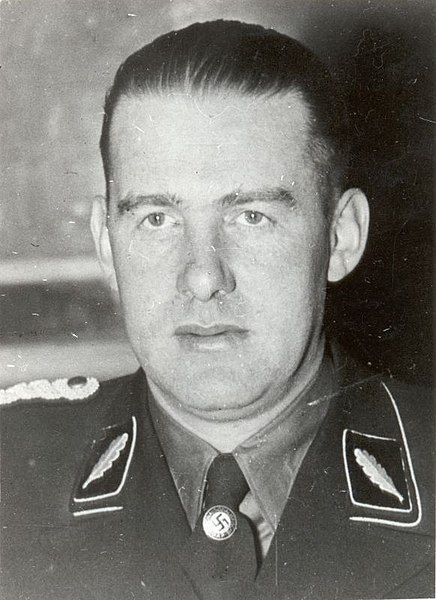
Odilo Globocnik, SS and Police Leader in the Lublin district of the General Government territory in German-occupied Poland, was placed in charge of Operation Reinhardt by SS Reichsführer Heinrich Himmler. [Wikipedia]
The devastation and horror of the Holocaust makes it difficult to truly wrap one’s head around its immense scale. Six million murdered Jews is a number so large that it is hard to comprehend, much less understand in detail. While there are many accounts of individual experiences, the wholesale destruction of the Nazi German documentation of their genocide has made it difficult to gauge the dynamics of their activities.
This action, known as Operation Reinhardt, originated during the Wansee Conference in January 1942 as the plan to carry out Hitler’s Final Solution to exterminate Europe’s Jews. In July, Hitler “ordered all action speeded up” which led to a frenzy of roundups by SS (Schutzstaffel) groups from over 400 Jewish communities in Poland and Ukraine, and transport via 500 trains to the three camps along the Polish-Soviet border. In just 100 days, 1.7 million people had been relocated and almost 1.5 million of them were murdered (“special treatment” (Sonderbehandlung)), most upon arrival at the camps. This phase of Reinhardt came to an end in November 1942 because the Nazis had run out of people to kill.
This three-month period was by far the most intensely murderous phase of the Holocaust, carried out simultaneously with the German summer military offensive that culminated in disastrous battlefield defeat at the hands of the Soviets at Stalingrad at year’s end. 500,000 Jews were killed per month, or an average of 15,000 per day. Even parsed from the overall totals, these numbers remain hard to grasp.
Stone’s research is innovative and sobering. His article can currently be downloaded in PDF format. His piece in The Conversation includes interactive online charts. He also produced a video the presents his findings chronologically and spatially:


 On Thursday, the U.S. Army released a long-awaited history of its operational combat experience in Iraq from 2003 to 2011. The study, titled The U.S. Army in the Iraq War – Volume 1: Invasion – Insurgency – Civil War, 2003-2006 and The U.S. Army in the Iraq War – Volume 2: Surge and Withdrawal, 2007-2011, was published under the auspices of the U.S. Army War College’s Strategic Studies Institute.


 With the December 2018 update of the U.S. Army’s Multi-Domain Operations (MDO) concept, this seems like a good time to review the evolution of doctrinal thinking about it. We will start with the event that sparked the Army’s thinking about the subject: the 2014 rocket artillery barrage fired from Russian territory that devastated Ukrainian Army forces near the village of Zelenopillya. From there we will look at the evolution of Army thinking beginning with the initial draft of an operating concept for Multi-Domain Battle (MDB) in 2017. To conclude, we will re-up two articles expressing misgivings over the manner with which these doctrinal concepts are being developed, and the direction they are taking.